
THE CURRICULUM
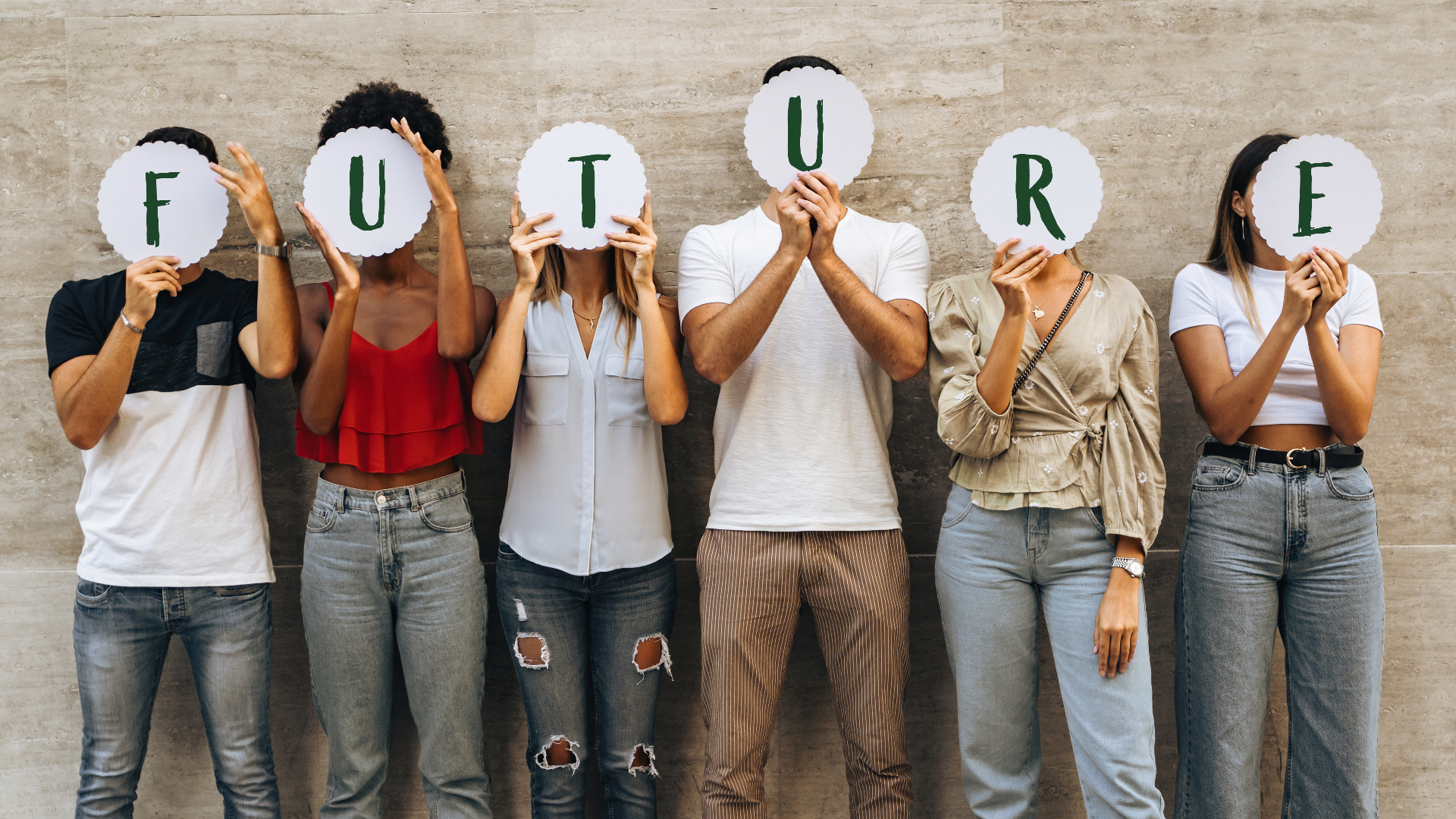
Three domains of human capability. Self. Society. Future.
THE NINE CAPABILITIES
Building the foundation for a future curriculum of human capability.
Education has spent centuries refining what young people should know. It has barely begun on everything else.
While academic achievement benefits from shared standards, human capability has far less shared language, and what exists is fragmented across schools and systems. Humanity Schools builds on decades of research in social-emotional learning and character education and brings it into one coherent, secondary-focused framework for the age of AI.
The Humanity Curriculum represents a long-term vision to help establish that foundation: a shared framework for developing the capabilities young people will need to thrive, contribute and flourish in an increasingly complex, interconnected and rapidly changing world.
THE CURRICULUM
The secondary pathway focuses on the capabilities that become increasingly important during adolescence, as young people develop identity, independence, responsibility and agency while preparing for a future shaped by artificial intelligence, biotechnology, climate change, technological disruption and profound social transformation.
Together, these nine capabilities provide a shared language for cultivating the qualities that will matter most in the century ahead: judgement, adaptability, belonging, creativity, collaboration, wisdom and the capacity to navigate complexity with confidence and purpose.
This is not simply a curriculum for school.
It is an early vision for the capabilities that will define human flourishing in the future of education.
“Human skills will matter more than ever in the age of AI.”
THE FRAMEWORK
Nine capabilities. Three domains. One shared curriculum.
Self
Adolescence is the period in which young people begin to develop identity, independence and responsibility. Self develops the foundations of attention, agency and wise decision-making.
Presence
The Anchor
The ability to regulate attention, emotions and energy while remaining grounded, aware and present.
Why it matters
As technology competes for attention and the pace of life accelerates, the ability to govern ourselves becomes increasingly valuable.
Agency
The Pilot
The ability to act with intention, find meaning, embrace optimism and take responsibility for outcomes.
Why it matters
As traditional pathways become less predictable, young people will increasingly need the confidence and initiative to shape their own futures.
Judgement
The Discerner
The ability to balance critical thinking and instinct, discern what is true and act wisely amid uncertainty.
Why it matters
As information becomes abundant and artificial intelligence becomes increasingly capable, judgement becomes more valuable than information alone.
Society
The challenges of the future will not be solved alone. Society develops the ability to build relationships, collaborate across difference and contribute to something larger than ourselves.
Connection
The Companion
The ability to empathise with others, build trust, foster belonging and develop meaningful relationships.
Why it matters
As loneliness rises and communities become increasingly fragmented, the ability to build trust, belonging and meaningful relationships becomes increasingly important.
Collaboration
The Weaver
The ability to bring people together, value diverse perspectives, coordinate strengths and work towards shared goals.
Why it matters
The opportunities and challenges of the future will increasingly require people to work across disciplines, cultures and perspectives to solve problems no individual can solve alone.
Impact
The Changemaker
The ability to turn purpose into action, champion positive change and make a meaningful contribution to the world.
Why it matters
The future will be shaped not only by technology, but by the values, choices and actions of the people who inherit it.
Future
The future cannot be predicted. It can be explored, influenced and shaped. Future develops the ability to learn, imagine and navigate what comes next.
Adaptability
The Pathfinder
The ability to learn, unlearn, adapt and grow through change with resilience and openness.
Why it matters
As careers, technologies and societies continue to evolve, adaptability becomes essential for lifelong learning and human flourishing.
Creative Innovation
The Imaginer
The ability to combine curiosity, creativity and innovation to advance what is possible.
Why it matters
As technology reshapes the way we live and work, human creativity and imagination become increasingly valuable.
Systems Thinking
The Navigator
The ability to understand relationships, patterns and the interconnected nature of complex systems.
Why it matters
The greatest challenges young people will inherit, from climate change to artificial intelligence, are systems problems rather than isolated events.
CONTINUE THE CONVERSATION